
|
Note: We are crunching Supreme Court of Wisconsin decisions down to size. The rule for this is that no justice gets more than 10 paragraphs as written in the actual decision. The “upshot” and “background” sections do not count as part of the 10 paragraphs because of their summary and necessary nature. We’ve also removed citations from the opinion for ease of reading but have linked to important cases cited or information about them. Italics indicate WJI insertions except for case names, which are also italicized. Case: State v. McAdory 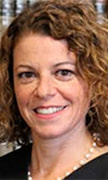 Dallet Majority: Justice Rebecca Frank Dallet (13 pages), joined by Chief Justice Ann Walsh Bradley and justices Jill Karofsky, Brian Hagedorn, and Janet Protasiewicz Concurrence: Justice Annette Ziegler (30 pages), joined by Justice Rebecca Grassl Bradley Upshot Under a Wisconsin statute directing a single sentence even when a defendant is found guilty of multiple impaired-driving offenses stemming from the same incident, if the conviction on one offense is reversed the court may reinstate a guilty verdict on an alternate offense. Background After a traffic stop in January 2016, Carl Lee McAdory was charged with eighth-offense operating a motor vehicle while under the influence of a controlled substance (OWI) and operating a motor vehicle with a detectable amount of a restricted controlled substance in his blood (RCS). A jury found him guilty of both offenses. Pursuant to a state statute, an individual may be charged and found guilty in a single case with any combination of three impaired driving charges, but can be sentenced on only one charge. Prior to sentencing the State moved (without objection) to dismiss the RCS charge and guilty verdict as “duplicative” under the statute. That statute provides that if a person is found guilty of more than one enumerated offense of OWI, RCS or operating a motor vehicle with a prohibited alcohol concentration (PAC), “there shall be a single conviction for purposes of sentencing . . . . " The circuit court granted the motion, and sentenced McAdory on the OWI charge and verdict alone. On appeal, the court of appeals overturned the OWI conviction on grounds unrelated to the RCS charge and guilty verdict. Accordingly the court of appeals’ opinion stated that it “reverse[d] and remand[ed] for a new trial on” the OWI offense. . . . The State did not seek to retry McAdory on remand. Instead, it asked the circuit court to reinstate the previously dismissed RCS charge and guilty verdict, enter a judgment of conviction, and dismiss the OWI charge. The circuit court agreed and proceeded to sentencing on the RCS charge and guilty verdict alone, granting McAdory sentence credit for the time he had already served on the invalidated OWI conviction. McAdory unsuccessfully challenged the circuit court’s reinstatement of the RCS charge and guilty verdict in post-conviction proceedings and in the court of appeals.  Guts The statute at issue is silent about two things: (1) what the circuit court must do procedurally after a person is convicted of more than one of the enumerated offenses, and (2) what the circuit court may do on remand if a conviction for one or more of those enumerated offenses is overturned on appeal. The first gap . . . has long been filled by the court of appeals’ decision in Town of Menasha v. Bastian, which explains that if a defendant is convicted of more than one of the . . . offenses (OWI, RCS, and PAC) in a single case, “the defendant is to be sentenced on one of the charges, and the other charge is to be dismissed.” That is what happened in McAdory’s case when, after the jury returned guilty verdicts on both the OWI and RCS charges, the circuit court dismissed the RCS charge and guilty verdict on the State’s motion prior to sentencing, and sentenced McAdory on the OWI conviction alone. The court decided not to address whether the court of appeals' Bastian and the court's own opinion in State v. Bohacheff (addressing similar statutory language) should be overturned, finding them irrelevant in McAdory's case, which involved only the second gap in the statute. . . . . In essence, McAdory argues that because the statute does not expressly authorize what the circuit court did, it must prohibit it. But that argument asks us to read too much into the statutory silence, since nothing in the statute prohibits what the circuit court did either. Accepting McAdory’s argument would mean that whenever a statute identifies an end goal like “a single conviction for purposes of sentencing and for purposes of counting convictions . . . ,” but does not specify how courts should reach that goal, every means of implementing the statute is prohibited. That argument cannot be right if for no other reason than it would prevent courts from implementing such statutes entirely. We conclude that the statute implicitly authorized the circuit court to reinstate the previously dismissed RCS charge and guilty verdict. That authorization flows from the text and structure of the statute itself, which establishes a procedure whereby multiple offenses from a single incident can be charged and tried in a single proceeding resulting in a single conviction for purposes of sentencing and counting convictions. What the circuit court did—first by dismissing the RCS charge and guilty verdict and later by reinstating it—implemented that statutory structure in a way that gave effect to its central premise, namely that guilty verdicts for the enumerated offenses are fundamentally interchangeable for purposes of the statute. Moreover, there is no suggestion that the RCS charge and guilty verdict itself was somehow invalid, or legally insufficient in a way that would otherwise make reinstating it improper. In short, the circuit court’s approach did not violate any provision of this statute or any other statute, and ensured that a statute designed to result in “a single conviction for purposes of sentencing and for purposes of counting convictions” was not transformed into one that results in no conviction at all. The court rejected McAdory's arguments that the state had somehow forfeited its right to seek reinstatement of the RCS charge and that the trial court violated the court of appeals' mandate by not holding a new trial. Finally, we are unpersuaded by McAdory’s arguments that reinstating the RCS charge and guilty verdict violated his right to be free from double jeopardy. The Fifth Amendment provides that “[n]o person shall be . . . subject for the same offence to be twice put in jeopardy of life or limb . . . ." The Wisconsin Constitution provides that “no person for the same offense may be put twice in jeopardy of punishment . . . .” Neither party develops any argument that the Wisconsin Constitution offers distinct double jeopardy protections from those guaranteed by the United States Constitution. As such, we analyze these claims together. The United States Supreme Court has described the Double Jeopardy Clause as containing three distinct protections: (1) “against a second prosecution for the same offense after acquittal;” (2) “against a second prosecution for the same offense after conviction,” and (3) “against multiple punishments for the same offense.” Although McAdory’s briefing is far from clear, we understand him to be focused solely on the latter two protections, the ones against second prosecutions for the same offense after conviction and against multiple punishments for the same offense. First, he appears to contend that he was prosecuted a second time for RCS after conviction because reinstating the previously dismissed charge and guilty verdict violated his expectation “that he would not be further prosecuted or punished for [that] offense.” Second, he asserts that he was threatened with a second prosecution for the OWI offense after conviction when, after reinstating the RCS charge and guilty verdict, the circuit court raised the possibility of a second trial on the OWI charge. Although the State stated that it did not intend to retry McAdory on that charge, and the circuit court dismissed it as a result, McAdory nonetheless contends that this sequence of events violates the Double Jeopardy Clause. And third, he maintains that he received multiple punishments because “swap[ping]” the RCS charge and guilty verdict for the OWI conviction may have prevented him from receiving sentence credit for the time he served. The problem with McAdory’s first argument is that he was not prosecuted twice for RCS. Instead, the circuit court reinstated the jury’s guilty verdict on the RCS charge from his first and only prosecution for that charge stemming from the January 2016 traffic stop. As many other courts have concluded, “[t]he Double Jeopardy Clause does not bar reinstatement of a conviction on a charge for which a jury returned a guilty verdict.” It is therefore irrelevant that once the RCS charge and guilty verdict were dismissed, McAdory “expect[ed]” that he would never be punished for it. Although the Double Jeopardy Clause certainly protects the defendants’ interest in finality, it does so only through its specific prohibitions, like the one on successive prosecutions after conviction. Because reinstating the RCS charge and guilty verdict did not result in a second prosecution for RCS after conviction, it did not violate the Double Jeopardy Clause. McAdory’s second and third arguments also miss the mark. McAdory was not prosecuted or tried twice for the OWI offense after the RCS charge and guilty verdict were reinstated. Rather, the OWI charge was dismissed at the State’s request, and he was never prosecuted or tried for it again. Moreover, even if a new trial had occurred, the Double Jeopardy Clause still would not have been violated since that second trial would have occurred as a result of the relief he sought in his appeal. As for multiplicity, McAdory’s argument is underdeveloped at best and is contrary to the facts, which—as McAdory’s counsel conceded at oral argument—demonstrate that he did in fact receive sentence credit for the time he served on the OWI conviction. Accordingly, we need not address this argument further.  Ziegler Concurrence
Like the majority, I would affirm the court of appeals. But I come to this conclusion for reasons quite different than those advanced by the majority. Unlike the majority, which employs a thoroughly purposivist analysis, I would address what the pertinent statute actually means and overrule this court’s decision in State v. Bohacheff, and the court of appeals’ decision in Town of Menasha v. Bastian. Rather than providing a detailed critique of the majority opinion, I set forth the opinion I believe should have been written by this court. One point must be made regarding the majority, however. The majority argues that this court cannot, or at least should not, overrule this court’s decision in Bohacheff because no party before this court asked us to overrule that decision. The majority’s argument rings hollow. First, the majority’s supposed commitment to the party presentation principle goes only so far. The argument the majority ultimately embraces in this case—that the statute implicitly authorized the circuit court to reinstate the dismissed charge and guilty verdict—is not advanced by either party. Both McAdory and the State expressly reject such an argument. Second, virtually every justice in the majority has voted to overrule a decision of this court even though no party asked the court to do so. In fact, one of the justices in the majority (Hagedorn) argued this very term that this court should have overruled at least four precedents of this court despite the fact no party requested this court to do so. *** Ziegler then sets for the full opinion she believes should have issued from the court, including the factual and procedural background and sections addressing McAdory's arguments regarding points with which she agrees with the majority. The following paragraphs are from her proposed version of the opinion regarding her point of difference. . . . The State and circuit court were following this court’s decision in State v. Bohacheff, and the court of appeals’ decision in Town of Menasha v. Bastian. Together, the two cases stand for the proposition that when a defendant is tried and found guilty for multiple offenses under the applicable statute that arise out of the same incident or occurrence, the circuit court must dismiss all but one of the charges and guilty verdicts. That is, even though there may be multiple guilty verdicts, there may be only one conviction. *** Bohacheff’s statutory analysis is unsound in principle. Bohacheff is accordingly overruled. Bastian’s dismiss-extra-counts rule is premised on Bohacheff’s faulty analysis and cannot be squared with the text of the statute. Consequently, Bastian must be overruled as well. . . . A fair reading of the statute allows the state to charge a defendant with an OWI offense . . . , an RCS offense . . . , and a PAC offense . . . , or “any combination” of those offenses, “for acts arising out of the same incident or occurrence.” Now, if the defendant is found guilty of more than one of the charges, the court enters judgment of conviction on each guilty verdict, as it is instructed to do . . .. There is to be a single conviction for two specific, enumerated purposes: sentencing and counting convictions . . . . This follows directly from the plain text of the statute. “If the person is found guilty of any combination. . . for acts arising out of the same incident or occurrence, there shall be a single conviction for purposes of sentencing and for purposes of counting convictions . . . . Bohacheff’s holding that there shall be a single conviction “for all purposes,” is at war with the statute's clear text. The statute enumerates two purposes for which there will be a single conviction, sentencing and counting convictions . . . . The legislature, therefore, expressly identified the circumstances when there shall be only one conviction. This means that in other circumstances there shall be more than one conviction. This is a classic application of the canon of statutory interpretation expressio unius est exclusio alterius, “‘[t]he expression of one thing implies the exclusion of others.’” *** Bastian’s dismiss-extra-counts rule adds words to the statute not found in its text. Nowhere . . . does the statute indicate that a circuit court must dismiss all but one guilty verdict if a jury finds a defendant guilty of more than one count. “‘One of the maxims of statutory construction is that courts should not add words to a statute to give it a certain meaning.’” Additionally, Bastian’s mandatory dismiss-extra-counts rule sits uneasily with another statute, which prescribes the procedure for dismissing (impaired driving) charges . . . . To dismiss a charge, the state must file an application with the circuit court that states the reasons for the proposed dismissal. It is after the application is filed that a circuit court may dismiss the charge, but “only if the court finds that the proposed . . . dismissal is consistent with the public’s interest in deterring” violations of the impaired driving laws. Accordingly, Bastian is overruled. *** Because of Bohacheff and Bastian, the State requested the circuit court to dismiss the RCS charge and guilty verdict, and the circuit court did so. That is, the dismissal was not due to any defect in the charge or guilty verdict, but simply due to the misinterpretation of the statute's text in Bohacheff and Bastian, which today we overrule. Under these circumstances, we find no error in the circuit court’s decision to reinstate the RCS charge and guilty verdict after McAdory’s initial appeal . . . .
0 Comments
 Entrance to the Wisconsin Senate in the Wisconsin State Capitol. Photograph by Margo Kirchner. By Alexandria Staubach The Wisconsin Senate recently voted along party lines to codify several types of specialty courts, including a controversial business court. The bill, having previously passed in the Assembly along party lines, now heads to Gov. Tony Evers for signature or veto. Treatment courts, such as drug courts and mental health courts, have long held bipartisan support. The creation of special civil courts to deal with large business and commercial case has been more controversial. Passage of the bill puts the Legislature’s stamp of approval on them. At the bill’s May 15 reading in the full Senate, Sen. Kelda Roys (D-Madison), criticized the bill as creating a “rocket docket for guys like Elon Musk,” without providing funding for any of the specialty courts, especially the treatment courts. “We don’t need a system where the powerful, the wealthy, the best connected among us get to have their own court system, their own handpicked judges, and then the rest of us can sit around and wait for our day in court to resolve really important critical matters,” said Roys. To date, specialty courts have generally been created by the courts themselves. For instance, Milwaukee County Circuit Court last summer started a specialty court for cases in which a defendant’s competency is at issue. Specific judges have been assigned to a specific type of case, sometimes with training in that legal area. AB 73 would recognize in statute the following specialty courts: adult drug treatment court, juvenile drug treatment court, operating-while-intoxicated treatment court, mental health treatment court, family dependency treatment court, veterans’ treatment court, hybrid treatment court, and tribal healing-to-wellness court. Treatment courts have long been used throughout the state. The bill also statutorily recognizes a specialized docket for commercial cases, the subject of Roys’ concern. A special court for business interests is relatively newer and will not immediately affect every county in Wisconsin. We don’t need a system where the powerful, the wealthy, the best connected among us get to have their own court system, their own handpicked judges, and then the rest of us can sit around and wait for our day in court to resolve really important critical matters. Wisconsin Sen. Kelda Roys (D-Madison) Wisconsin’s commercial courts were born out of a 2017 Supreme Court rule that characterized the specialty docket as a “pilot project.” That pilot project lasted more than seven years in only certain trial courts in the state.
Last year, the Supreme Court evaluated the pilot project and declined to extend it for another two years. The court divided along ideological lines. Referencing the same courts that were part of the pilot project, the bill provides procedures for establishing commercial courts in the following judicial districts and their corresponding counties: the second district (Kenosha, Racine, Walworth), the third district (Dodge, Jefferson, Ozaukee, Washington, Waukesha), the fifth district (Columbia, Dane, Green, Lafayette, Rock, Sauk), the eighth district (Brown, Door, Kewaunee, Marinette, Oconto, Outagamie, Waupaca), and the tenth district (Ashland, Barron, Bayfield, Burnett, Chippewa, Douglas, Dunn, Eau Claire, Iron, Polk, Rusk, St. Croix, Sawyer, Washburn). Judges would be assigned to those counties with prior or existing commercial courts by the chief justice of the Supreme Court, “after considering the recommendation of the chief judge of the encompassing judicial administrative district,” according to the bill. The bill can be retroactively applied to any county that chooses to develop a commercial court. The first district, composed solely of Milwaukee County Circuit Court, which is the busiest judicial district, was not part of the pilot program and does not currently have a commercial court. Roys at the May 15 floor session strongly supported recognition of treatment and diversion courts, saying that they were “win-win.” She suggested that the Legislature dedicate state funds to run them. “Without an appropriation, without money, programs can’t run,” she said. Recognition and funding of the treatment courts is “one step that we can take to address the shameful fact that Wisconsin incarcerates two to three times more people than our neighboring state of Minnesota, and I refuse to believe that Wisconsinites are two to three times worse than Minnesotans,” Roys said. But she proposed that the Legislature delete the provision recognizing business courts. The commercial courts do “nothing to help everyday Wisconsinites,” she said. Sen. André Jacque (R-New Franken) disagreed with Roys, saying the bill “was not about creating a rocket docket for anything” and that “these are all specialty courts that have been in operation in Wisconsin, and very successfully I might add.” Jacque sponsored the bill in the Senate, along with Sen. Van Wanggaard (R-Racine), Sen. Dan Feyen (R-Fond du Lac), and Sen. Steve Nass (R-Whitewater). In written testimony filed with the bill, Jacque said the commercial courts would “aid the effective resolution of commercial disputes and help provide more certainty for our economy.” Before declining to extend the pilot project last year, the Supreme Court held a public hearing in September 2024 at which those involved in commercial litigation overwhelmingly supported continuing the business court. Retired Judge Richard G. Ness was a rare voice against the project. Ness said at the September hearing that the program is the “creation of a solution for a problem that doesn’t exist.” He said that in his 13 years on the bench, he never encountered an inability to effectively deal with civil business cases. Justice Rebecca Grassl Bradley asked how business court differed from juvenile court, sexual assault court, probate court, criminal courts, and other civil courts. She told Ness that he was holding the commercial courts to a “very different standard” than the other specialty courts. Ness, who testified that he also spent 26 years representing big business, previously said in an op-ed for Wisconsin Watch that the project “has granted large commercial interests outsized influence over our court system’s handling of their cases, exactly as intended.” Department of Corrections battles with Division of Hearings and Appeals in Supreme Court argument4/2/2025  By Alexandria Staubach
A Wisconsin Department of Corrections lawsuit that could change evidentiary requirements in probation revocation hearings landed in the Supreme Court for oral arguments in late March. Whether and to what extent probationers maintain minimal rights to confrontation is at stake. The case concerns the overturning by the Division of Hearings and Appeals (DHA) of an administrative law judge’s decision to revoke Keyo Sellers’ probation. Attorney Clayton Kawski represented the DOC at oral arguments before the Supreme Court. Attorney Elizabeth Pierson appeared on behalf of the DHA at the hearing. Attorney Daniel Drigot appeared on behalf of Sellers. The DHA is a quasi-judicial, independent entity within the Department of Administration that oversees a panel of administrative law judges, including those who preside over probation revocation hearings. In the DHA’s opinion, the judge had revoked Sellers’ probation on scant, inadmissible evidence. In June 2019, Sellers was placed on probation for a drug conviction. Almost three years later, the DOC initiated revocation proceedings after Sellers was charged with sexual assault and other violations. According to the allegations described in court filings, Sellers, while masked, sexually assaulted an unnamed victim, stole $30 from her, and returned to her home a week later as shown on home security footage. The victim could not identify him definitively, but both his probation officer and ex-wife identified him in the home security footage and made out-of-court statements. Sellers denied the sexual assault and trespass on the victim’s property. At the probation revocation proceedings, the ALJ considered Y-STR DNA evidence. Y-STR DNA evidence is inherently less specific that usual DNA evidence, as it compares DNA location on the Y chromosome exclusively. DNA collected from the victim after the sexual assault indicated that one out of 278 African American males would have a consistent profile, meaning that in Milwaukee, based on census data, 389 African American males would match the profile. According to Kawski, the DOC declined to call the victim to testify at the revocation proceeding, and did not even ask her to testify, out of concern that testifying would “re-traumatize” her and because she could not definitively identify Sellers as her assailant. The ALJ presiding over the hearing believed that the Y-STR DNA evidence coupled with the out-of-court, “hearsay” statements of the probation officer and ex-wife were sufficient to find it more likely than not that Sellers committed the crimes and therefore revoked Sellers' probation. Sellers appealed the ALJ’s decision to DHA, which found that without testimony from the victim, the only credible evidence of nonconsent to the trespass and sexual assault was inadmissible hearsay, which deprived Sellers of his constitutional right to confrontation. The DHA believed that the DOC’s decision not to call the victim as a witness was not due to any “difficulty, expense, or other barrier to obtaining live testimony,” as required under the legal standard of “good cause” for not calling her. The good-cause standard protects an individual’s limited right to confrontation in probation revocation cases. The revocation proceedings before the administrative law judge occurred separately from proceedings on the merits of the charges in court. Ultimately, Sellers was convicted at trial and sentenced to more than 30 years in prison. “So why are we here?” asked Justice Jill Karofsky about the appeal on the revocation matter. “He owes the state more time,” said Kawski. He added that the case in front of the Supreme Court was the only thing maintaining the DOC’s supervision of Sellers on the old drug case. Kawski also argued that the Supreme Court had not opined about the standard governing evidence at probation revocation hearings in more than a decade. “Without relying on the hearsay evidence of the victim, which (the administrative law judge) couldn’t do without violating Mr. Sellers’ constitutional rights, the rest of the allegations did not prove DOC’s allegations,” Pierson argued in response. “To show good cause . . . they have to show that there is a difficulty, expense, or other barrier and then that gets balanced against the constitutional rights of the accused,” said Pierson. Oral arguments focused heavily on the sufficiency of the evidence and whether the DOC had good cause for not calling the victim to testify at the revocation hearing. Chief Justice Ziegler and Justices Rebecca Dallet, Janet Protasiewicz and Jill Karofsky are all former prosecutors. Dallet and Karofsky said the “unfamiliar” DNA evidence probably cut against DOC. “You’re putting a lot of weight in the reliability of the proffered evidence,” Karofsky said to Kawski. However, she also remarked that avoiding re-traumatization of the victim “feels like that fits the exception” for good cause. Kawski repeatedly insisted on the sufficiency of the DNA evidence and said “the more reliable the evidence is, the less is necessary for the state to show.” Pierson said the DHA relied on the fact that the victim was never even asked to testify. “There was nothing to suggest that she was asked and declined,” Pierson said. “We need something more than DOC’s word,” she said. Pierson insisted that however the court applies the standard governing good cause, “it cannot be that low.” Drigot insisted at oral argument that the DOC was asking the court to create an exception for out-of-court statement use at probation revocation hearings that does not currently exist. A finding that good cause excused the DOC from calling or even asking the victim to testify would be “an opinion on whether that’s what the law should be, but not the rule right now,” said Drigot. The justices gave no hints on where they will land, though Justice Brian Hagedorn said he was “not convinced we need to change (the standard) in any way.” By Alexandria Staubach
The Supreme Court recently voted 4-3 to increase an annual assessment on Wisconsin attorneys that funds civil legal services for those who cannot pay. A $50 public interest legal services assessment has been on the books since 2005 as part of annual fees for Wisconsin attorneys. The assessment will increase to $75 for two years then to $100. Retied Milwaukee County Circuit Court Judge Richard Sankovitz spoke on behalf of the petitioners, eight legal service providers or supporters, at a March 13 hearing on the request for the increase. He stressed that a steady stream of revenue to those providing free or reduce cost civil legal services is essential to continuity of service. The reliability of the funds from the attorney assessment is one of its essential features, especially in a landscape where groups otherwise rely on discretionary grants that vary from year to year, he said. At least 3,000 people are aided by the funds from the assessment each year, Sankovitz said. He described how the funding provides direct legal services for individuals on matters ranging from access medical care coverage to temporary restraining orders for domestic violence victims. There was near unanimous agreement in the Supreme Court hearing room that the Legislature should be doing more to support legal services for those who cannot afford attorneys. But the Legislature has appropriated funds only once in the assessment’s 20-year history, Sankovitz said. At the recent hearing, as in 2005, some justices questioned whether such a fee is constitutional. At oral arguments, Justice Brian Hagedorn said he was “sympathetic to the idea that this is an unconstitutional tax.” “What limits are there on our power to raise funds?” he asked. Hagedorn also expressed concerns that some of the nonprofits that receive funds provided from the assessment may have ideological stances that attorneys disagree with. Are we not “asking attorneys to subsidize work they may not agree with?” he asked. “There is no stopping point,” said Justice Rebecca Grassl Bradley. She said she was sympathetic to the cause because her family could not afford needed civil legal services when she was young. But “we went without,” she said. At the justices’ open conference following oral arguments, Justice Janet Protasiewicz moved to adopt the measure. The assessment will address “a pressing need,” she said. A court majority then determined that in the absence of Legislative funding it was appropriate to continue the assessment and approve the increase. Justice Ann Walsh Bradley was the only current justice on the bench when the rule was originally adopted in 2005. She said she was voting for the measure because the bench and bar have “an ethical obligation” to ensure “the quality of legal representation.” While Chief Justice Annette Zeigler ultimately voted against the petition, she said “on a personal level I can’t say I am disappointed that these services will continue to be funded.” Wisconsin Justice Initiative submitted written support of the petition to increase the assessment, and WJI Board member James Gramling spoke on behalf of WJI at the hearing on the petition. Gramling said “the pro bono efforts that are made by members of the State Bar are huge, but they are not enough to address the need.” In its letter, WJI highlighted that legal representation “assists the court by streamlining proceedings, providing otherwise pro se litigants with explanations of procedures and law, reducing the need for law clerks and judges to conduct research, and getting to the heart of a case and to judgment more quickly.” Many other organizations and individuals shared WJI’s support for the petition in writing or at the hearing. Waukesha Circuit Court Judge William Domina, who had testified against the introduction of the assessment in 2005, appeared at the hearing now in support. He said that in his 40 years as a Wisconsin attorney and 15 years on the bench he has observed both “an increase in demand” and an “increase in the self-represented.” Domina urged the court to consider “that costs have increased over time and ours will as well.” In written submissions on the petition for the fee increase, only one writer, an attorney, opposed the measure, while 33 supported it. Another entity, the State Bar of Wisconsin, submitted a response that did not take a “binary position” entirely for or against the petition. Instead, the State Bar presented the results of a survey of its 18,000 members. The survey, to which roughly 17% of Wisconsin attorneys responded, showed that 65% opposed the increase. “(A)s an organization representing Members with divided opinions on this subject,” though, the State Bar also presented in its written submission some of the arguments its members expressed for and against. State Bar President Ryan Billings appeared at the hearing on the petition as well and highlighted the views of State Bar members opposing the petition. He said that funding civil legal services was the right to thing to do but that it was a “question of what is the appropriate mechanism.” Billings, and the court’s more conservative justices, thought funding for civil legal services was the responsibility of the Legislature. Susan Crawford and Brad Schimel vie for the open seat on the Wisconsin Supreme Court created by Justice Ann Walsh Bradley's retirement. The election is April 1. Crawford is a trial judge on the Dane County Circuit Court. She graduated from the University of Iowa College of Law in 1994. Schimel is a trial judge on the Waukesha County Circuit Court. He graduated from the University of Wisconsin Law School in 1990. WJI asked each of the candidates to answer a series of questions. The questions are patterned after some of those on the job application the governor uses when he is considering judicial appointments. Crawford responded to WJI's questionnaire. Schimel did not. Answers are printed as submitted, without editing or insertion of “(sic)” for errors.  Susan Crawford
Why do you want to become a justice on the Wisconsin Supreme Court? As a prosecutor, private-practice attorney, and now as a judge, I have always worked to protect the basic rights and freedoms of Wisconsinites under our laws and Constitution, and to use my legal training and experience to have a positive impact on people and communities. I have broad legal experience, including arguing before the Wisconsin Supreme Court in both criminal and civil cases. I know how important it is to have Wisconsin Supreme Court justices who are fair and impartial and who will reject efforts to politicize the Court and undermine our constitutional rights. Describe which U.S. Supreme Court or Wisconsin Supreme Court opinion in the past 25 years you believe had a significant positive or negative impact on the people of Wisconsin and explain why. The Court’s decision in Clarke v. Wisconsin Elections Commission is particularly significant because it upheld the Wisconsin Constitution and our democratic principles. I agree with the majority's decision in this case, which found the state’s legislative maps unconstitutional. As a result of this decision, the legislature and the governor agreed to new maps that comply with the Wisconsin Constitution. Describe your judicial philosophy. My approach to judicial decision making is people-centered and grounded in common sense. I consider myself a pragmatist. I work hard to get the facts right and to apply the law fairly and impartially. In my view, our laws are tools to protect people. It’s important to consider the purposes of the law and how it will affect the parties when applying it. My goal is always to arrive at a fair and just result. Another core component to my judicial philosophy is how I treat people in my courtroom. I want everyone who enters my courtroom, whether or not they achieve the result they were seeking, to leave feeling they were heard, treated with respect, and got their day in court. Describe two of the most significant cases in which you were involved as either an attorney or a judicial officer. As a judge, the most significant cases I have presided over involve children and families. In cases involving children in need of protection and services, I had the opportunity and privilege to reunite children with their families after the parents received court-ordered services to help them to overcome problems like mental health crises and drug addiction that had prevented them from caring for their children. As a lawyer, I litigated several high-profile public interest cases that broadly impacted the rights of Wisconsinites. One such case was Planned Parenthood of Wisconsin v. Brad Schimel. Our team of lawyers successfully challenged an anti-abortion law that threatened doctors with the loss of their medical licenses for providing abortions to women. The law was found unconstitutional by the federal district court for the Western District of Wisconsin and the decision was upheld by the Seventh Circuit Court of Appeals. Describe your legal experience as an advocate in criminal litigation, civil litigation, and administrative proceedings. As a former prosecutor, government attorney, private-practice attorney, and now as a Circuit Court Judge, I’ve dedicated my entire career to upholding the law and protecting Wisconsinites under our laws and constitution. I started my career at the Wisconsin Department of Justice, where I prosecuted felony cases in the Wisconsin Supreme Court and Court of Appeals, prosecuted health care fraud and abuse cases in circuit courts throughout the state, and and served as director of criminal appeals, the largest legal unit at the DOJ. As chief legal counsel in the office of Governor Jim Doyle, I oversaw the fair and equal enforcement and application of our laws throughout state government. Later in my career, as a civil litigator in private practice, I advocated for Wisconsinites from all walks of life, standing up for their rights in court. Describe an instance when you were challenged and had to exhibit courage in the face of adversity or opposition and how you handled that situation. When I was in high school, my dad, an engineer, was laid off from his job. It took some time for him to find another job in his highly technical field. As a result, my family went through some tough times financially. I did my part by financing my own college education. Do you support requiring a justice or judge to recuse him/herself from cases involving donors and indirect supporters who contribute money or other resources to the judge's election? If not, why not? If so, why, and what contribution limits would you set? I am open to considering proposals to strengthen the recusal rules for judges and justices. As a judge, I make decisions on recusal after evaluating the parties and legal issues raised in the case. If I believe I am unable to be fair and impartial for any reason, I do not remain on the case. Just as I have in my current courtroom, I will look at every case that comes before me on the Wisconsin Supreme Court and make a determination as to whether it’s appropriate for me to sit on that case. What are the greatest obstacles judges face when trying to deliver true justice? What can or should be done about them? [Define “true justice” as you see fit.] The most significant obstacle is the lack of affordable legal services to people facing significant legal issues without representation. Although as a judge I take care to explain courtroom procedures to pro se litigants, many civil cases, including evictions, family court matters, and mortgage foreclosures involve complex legal issues that place unrepresented parties at a disadvantage. As a judge, I’ve seen firsthand how the lack of representation affects parties and the legal system. Low or no-cost legal representation or legal clinics, simplified court procedures and forms, and better access to quality legal research materials could help reduce these disadvantages. If elected to the Wisconsin Supreme Court, I’ll advocate for increased resources to serve Wisconsinites fairly and effectively. To me, justice means that everyone who comes into my courtroom is treated fairly and with respect, regardless of the outcome. It’s about thoroughly examining all the facts, weighing the evidence impartially, and ensuring each party has an equal opportunity to be heard. Above all, it’s about upholding the law with fairness, transparency, and accountability. I want everyone who enters my courtroom to leave feeling they were treated with respect and got their day in court. Provide any other information you feel would be helpful to potential voters deciding for whom to vote. My opponent, Brad Schimel, has spent his entire career as an extreme politician and has made it clear that he’s more interested in pushing a partisan, right-wing agenda than upholding the independence and impartiality of our courts. During his time as Wisconsin’s Republican Attorney General, he defended Scott Walker’s attacks on workers’ rights and our basic freedoms—putting politics ahead of the people he was supposed to serve. As a former prosecutor, private-practice attorney, and now as a judge, I have spent my career focused on upholding our laws and Constitution, and fighting to protect the fundamental rights and freedoms of all Wisconsinites. I am committed to fairness, impartiality, and ensuring that every person enters my courtroom, whether they win or lose, gets a fair shake. Brad Schimel has also shown a troubling willingness to prejudge cases before they even reach the bench. He’s openly condemned the recent ruling overturning portions of Act 10 and continues to defend Wisconsin’s outdated 1849 abortion ban as “valid.” That’s not how justice should work. If I have the honor of serving on the Wisconsin Supreme Court, I will approach every case with an open mind—listening carefully to both sides, weighing the facts, and applying the law based on the Constitution and established precedent. That’s what fairness demands, and that’s what Wisconsinites deserve.  Lubar Center Director Derek Mosley interviews Dane County Circuit Court Judge Susan Crawford at Marquette University Law School on Feb. 28, 2025. Photograph by Alexandria Staubach. By Alexandria Staubach
Dane County Circuit Court Judge Susan Crawford would not hint at what her position on pending cases would be if elected to the Wisconsin Supreme Court, but she wasn’t shy about a body of professional work that demonstrates her values. Crawford told a packed house at Marquette University Law School on Friday that during her tenure as a civil litigator she represented the League of Women Voters, physicians at Planned Parenthood Wisconsin, and educators fighting Act 10, the law that largely gutted collective bargaining for public employees in the state. Crawford also highlighted her work as an administrator in Wisconsin’s Department of Natural Resources in Gov. Jim Doyle’s administration. She said those fights on behalf of her civil clients led her to the judiciary in 2018. She often found success in circuit court, but then the Supreme Court “would ask questions that were not based on the law” and that “really (got) into political questions.” Crawford’s remarks occurred during a “Get to Know You” forum moderated by Derek Mosley, director of the law school’s Lubar Center for Public Policy Research and Civic Education. A recording of the forum can be found here. Crawford called out her opponent, Waukesha County Circuit Court Judge Brad Schimel, when saying she thinks “it’s really important to adhere to the judicial code and not comment on pending cases.” She accused Schimel of openly saying “there’s nothing wrong with” Wisconsin’s 1849 law on abortion. She said she has “really refrained” from taking any stance on pending litigation and skirted an audience question asking her position on the decline of diversity, equity, and inclusion at the federal level and the potential for litigation in that area. “It’s going to be up to the parties and the lawyers to decide if there is a state court role to play,” she said, calling the courts “reactive not proactive.” Crawford described her judicial philosophy as “pragmatism,” which she said allows her to “apply the laws to protect the people of the state.” Schimel claimed originalism as his judicial philosophy at a Lubar Center forum last week. Originalism is the view that a constitution or law should be interpreted by today’s jurists in a way they think the writers of the document intended; they act like historians to give the words their perceived original meaning. Three other Supreme Court justices claim originalism, meaning that Schimel's election to the court would make it the majority view. Crawford said that to her, “originalism is a starting point for analysis,” but asking “why was this law enacted” and considering its application over time informs her views. This “gives you a much deeper understanding,” said Crawford. Crawford’s civil litigation experience is coupled with a long career working in various roles for Doyle, when he was attorney general and then governor. “I always said, ‘yes sir, I will take up this new challenge,” said Crawford about her time working for Doyle. Notwithstanding that government work, Crawford told the audience that she was “not running on a partisan agenda.” No matter the issue, she promised the crowd, she will evaluate any evidence, listen to argument, perform her own legal research, and consult with her colleagues prior to rendering every decision if she’s elected. A prospective colleague, Justice Rebecca Dallet, listened from the front row. Th audience asked Crawford about donations from George Soros and J.B Pritzker, the former donating $1 million and the latter donating $500,000 to the state Democratic Party, which passed the money along to Crawford’s campaign. Crawford largely dodged the question about contributions to her own campaign but took the opportunity to say Schimel was taking Elon Musk’s money with obvious strings attached. “Elon Musk is entering the race” and “openly saying he wants Schimel on the court to advance Trump’s agenda,” said Crawford. “I never thought I would be fighting with the world’s richest man for justice in Wisconsin,” she laughed. An audience member questioned Crawford about an accusation that her election could result in a decision that would generate two U.S. House seats, based on Crawford’s appearance at a donor event earlier this year. Crawford said she did attend a video call for the group Focus on Democracy but that she never discussed congressional maps nor took any questions related to them. About congressional maps, “I have never taken a position publicly or privately and don’t know what my position would be,” she said.  By Alexandria Staubach
The Wisconsin Supreme Court in mid-February heard oral arguments in four cases and issued numerous orders, including denial of a petition to skip the Wisconsin Court of Appeals regarding Dane County Circuit Judge Jacob Frost’s decision invalidating part of the public union collective bargaining law known as Act 10. The Court heard arguments in two civil cases and two criminal cases. Here’s the recap. State v. Luis A. Ramirez The Supreme Court’s many former prosecutors grilled counsel for Luis Ramirez about what constitutes a permissible delay on the part of the state and court system. Jennifer Lohr, Ramirez’s attorney, responded that the delay in Ramirez’s case was four times the minimum for presumed prejudice against a defendant. “It is the government’s duty to keep the justice system moving,” Lohr argued. The Court of Appeals found that the state acted with “cavalier disregard” for Ramirez’s constitutional right to a speedy trial. The state offered explanations for its many adjournments. Its counsel, John D. Flynn, argued that Ramirez was incarcerated on another conviction while the case was pending and that he only ever asked for a speedy trial without the assistance of counsel. The bulk of the court’s questioning centered on the meager circuit court record when it was rescheduling trial dates, but there were also differing views about the duration of delays, even if the delays were explainable. On one hand, Justice Janet Protasiewicz recalled her time as a prosecutor and said that in Ramirez’s case “the facts seem relatively simple” and should not have required much preparation to take to trial. Justice Jill Karofsky, on the other hand, recalled her time on the bench to say “the state did exactly what it should do” and that “for everyone one of the continuances for trial, there is a reason for it.” “What prejudice did your client suffer?” asked Justice Rebecca Grassl Bradley. “He was going to be in prison for a very long time, his liberty interest was not even implicated,” she said. Lohr argued that the sheer duration of delay was sufficient to demonstrate prejudice to Ramirez. Ramirez, who was serving a prison sentence, was charged with battery after allegedly assaulting a correctional officer. Over the following 46 months, Ramirez saw his trial rescheduled several times, for reasons that included a prosecutor’s retirement, a courthouse remodel, scheduling conflicts, and his own pro se motions. “Pro se” representation occurs when a defendant represents himself without counsel. Columbia County Circuit Court Judge W. Andrew Voight had ruled that despite the many delays, Ramirez’s right to a speedy trial was not violated. Voight found that Ramirez’s motions, including for discovery and change of venue, were inconsistent with his expressed desire for a speedy trial. The Court of Appeals overruled Voight’s decision, stating that that while some of the delay was justified, the state acted in “cavalier disregard” for Ramirez’s right to a speedy trial. “What would you have us do with the words ‘cavalierly disregard’?” asked Justice Rebecca Dallet. “Cavalierly disregard them,” joked Karofsky in response. Dallet signaled where the court might land in its opinion, asking Flynn his thoughts on “something that was more like we focus on what the reasons for the delay are and we don’t require, as no case has required, that someone gave reasons for the length of time it took to reschedule the trial.” “I’d be perfectly happy with that,” said Flynn, smiling and then yielding the rest of his time on rebuttal. Scot Van Oudenhoven v. Wisconsin Department of Justice The Wisconsin Court of Appeals over the summer upheld the denial of Scot Van Oudenhoven’s handgun purchase application based on a previous misdemeanor domestic violence conviction that was expunged under Wisconsin law. Van Oudenhoven then took his case to the Supreme Court. In oral arguments, justices grappled with every aspect of the case. Justices Janet Protasiewicz and Jill Karofsky were passionate in their concern over whether the underlying expungement was valid in the first place, revisiting time and again Van Oudenhoven’s date of birth and date of conviction. Current state law permits expungement of an offense with a penalty of six years or less if it was not a violent felony and the defendant was under age 25, had no prior felony record, and requested expungement at the time of sentencing. At the time of Van Oudenhoven’s conviction in 1994, the age was 21, said Karofsky. She pointed out that she was at that time a prosecutor for crimes of domestic violence. Justices and parties discussed how Van Oudenhoven was older than 21 at the time of conviction and did not request expungement at sentencing. “If it were an illegal expungement, is it void?” asked Karofsky at the outset of oral arguments. Justice Brian Hagedorn grappled with the different meanings of expungement among the 50 states. At issue was whether a federal statute permitting a defendant whose criminal record has been “expunged or set aside” to obtain a handgun, covers defendants who have had their criminal records expunged in Wisconsin. Attorney Brian P. Keenan from the Wisconsin Department of Justice opposed Van Oudenhoven’s petition. He emphasized that under federal law, “all effects” of conviction must be erased. In Wisconsin, expungement only affects the court and public’s record of the crime, he said. “Here it just means that the record has been removed from the court files,” Keenan argued. “The conviction itself has not actually been expunged from anything,” he said. The court grappled with what Congress intended when including expunged crimes in the law providing restoration of firearms rights. Hagedorn cited a variety of sources, including legal website Justia Law and Black’s Law Dictionary, to say that “expungement” means something different in effectively every state. “It makes imminent sense to me,” said Hagedorn, that the Legislature used expungement to mean however a state defines expungement, as the converse effect would be that the law is “absolutely irrelevant.” Justice Rebecca Dallet asked Keenan whether the DOJ’s best argument was whether “the plain text of the statute is that the conviction actually needs to be expunged.” Keenan replied “yes.” There appeared to be no consensus among the justices regarding whether and to what extent “expungement” under Wisconsin law has the same meaning as in the federal statute. Service Employees International Union Healthcare Wisconsin v. Wisconsin Employment Relations Commission Oral argument in this case concerned whether the Wisconsin Employment Peace Act applies to the University of Wisconsin Hospitals and Clinics Authority (UWHCA) and gives its employees collective bargaining rights notwithstanding the public union collective bargaining law known as Act 10. UWHCA was originally included under the Peace Act in 1996, but was later removed. In a case brought by UW healthcare workers, the Wisconsin Employment Relations Commission and Dane County Circuit Judge Jacob Frost concluded that the Legislature’s statutory changes in Act 10 reflected a clear intent to exclude UWHCA from the Peace Act, meaning that its employees no longer have collective bargaining rights. The Supreme Court took the case directly, bypassing the Court of Appeals. The justices and parties focused on legislative intent to include or exclude UW healthcare workers when it enacted Act 10, with a new twist: asking the Supreme Court to ignore what the Legislature may have intended at the time of enactment (originalism) and instead focusing on the plain language of the law. UW healthcare workers brought a previous case in federal court and were unsuccessful. This time, they argued that they should never have been covered by Act 10 because they are closer to private employees than public employees. “There is an element of all of this that I must confess feels a little bit like the emperor’s new clothes, where everyone has a firm grasp on reality until a new tailor comes to town and says I’m going make you a garment that only the most sophisticated people can see,” argued attorney James Goldschmidt on behalf of UWHCA, which opposed the employees’ petition. Hagedorn was vocal during oral arguments and from the start asserted that the employees’ interpretation of law was “contrary to what all our cases say, at least in the last 20 years.” Justice Rebecca Grassl Bradley also voiced opposition, saying “what your argument is asking this court to do, is back track off at least two decades of recent precedent.” Justices Rebecca Dallet and Ann Walsh Bradley were more open to the argument, but even Walsh Bradley told the employees’ counsel that the “legislative history is so strong here that if applied here your clients lose.” State v. Carl Lee McAdory WJI has been following this case since the summer of 2023. The case finally made it to a hearing in the Supreme Court. In Carl Lee McAdory’s case, a Rock County Circuit Court judge disregarded an appeals court order for a new trial and instead sentenced McAdory on a charge that had previously been dismissed. Prior coverage is here and here. McAdory was charged with eighth-offense operating under the influence (OWI) and eighth-offense operating with a restricted controlled substance (RCS). Blood testing showed he had cocaine and marijuana in his system when arrested. A jury found him guilty on both counts. OWI requires a showing that drugs in McAdory's system impaired his driving. RCS law makes it illegal to drive with any detectable drug in the blood, whether or not it affects the person's driving ability. Because Wisconsin law says McAdory could only be sentenced on one of the counts arising from the same conduct, the prosecutor moved to dismiss the RCS charge. The court sentenced McAdory on the OWI count. Typically, when a court dismisses a count, it cannot be retried or revived. And in McAdory’s case there was no argument that the circuit court’s dismissal was without prejudice—a legal mechanism which would permit the count’s resurrection. McAdory appealed his OWI conviction. The Court of Appeals held that the state repeatedly misled the jury about what the state had to prove for conviction on the OWI charge. The appeals court remanded with an order for a new trial. However, McAdory did not get a new trial on remand. Instead, the prosecution asked Judge Karl Hanson to revive the dismissed RCS count and sentence McAdory on that charge, which Hanson did. During oral arguments in the Supreme Court, the justices and the state’s attorney wrestled with whether McAdory and other defendants could receive a windfall for what was characterized by the state as a mistake. The state could have asked the circuit court to dismiss the more difficult to prove OWI charge and for a sentence on the RCS charge. That could have avoided grounds for appeal, as McAdory’s appeal hinged on the state’s failure to prove the drugs his system in fact impaired his driving. The state is asking the court to “rescue it from strategic decision-making gone awry,” argued McAdory’s attorney, Olivia Garman. “While the parties disagree on just about everything in this case, there’s one thing we can agree on, that the procedural history that got us here should never happen again,” argued John W. Kellis on behalf of the state in asking the court for guidance in a muddy area of law. Justices Ann Walsh Bradley and Brian Hagedorn floated the idea of crafting an opinion that would instruct the lower court to dismiss one count, consistent with the statute, but without prejudice, which the law is currently silent about. Justice Rebecca Grassl Bradly suggested entering convictions on both counts but sentencing on only one. By Alexandria Staubach
The Wisconsin Supreme Court on Wednesday approved the State Bar of Wisconsin’s petition seeking recognition of a special continuing legal education (CLE) credit for courses concerning cultural competency and reduction of bias. Attorneys must complete 30 hours of CLE every two years. The State Bar successfully argued that attorneys could credit up to six hours of cultural competency courses toward those 30 hours. “If a result is that one attorney in this state is more attuned to the marginalized communities in this state, that is good enough for me,” said Justice Jill Karofsky at the Supreme Court’s open conference on Wednesday about the proposed rule change. Justices Ann Walsh Bradley, Rebecca Dallet, Karofsky, and Janet Protasiewicz approved the State Bar’s petition. Chief Justice Annette Ziegler and Justices Rebecca Grassl Bradley and Brian Hagedorn opposed it. The court has a history with the issue. The State Bar sought a similar rule change in 2023. At that time, former Chief Justice Patience Roggensack joined with Ziegler, Grassl Bradley and Hagedorn to deny the State Bar’s petition. At Wednesday’s conference, Grassl Bradley called the new petition a thinly veiled “rebrand” and said education in cultural competency is “coercive.” In a heated statement of opposition, she accused the four justices approving the petition of “virtue signaling.” Grassl Bradley's comments suggested that the country was “thankfully” moving away from diversity, equity and inclusion education, as demonstrated by the results of the most recent election. In her concurrence to the 2023 decision, Grassl Bradley cited conservative political commentators to say that diversity, equity and inclusion education panders to identity politics and “poses a threat to republican self-government by corroding patriotic ties, fostering hatred, promoting cultural separatism, and demanding special treatment rather than equality under the law.” Hagedorn on Wednesday said that although cultural competency was “well intentioned,” he thinks such education is “wrong-headed and likely counterproductive.” He cited the actions of major corporations like Disney and Amazon to move away from diversity, equity, and inclusion education. Zeigler took issue with the fact that more than half of CLE credit hours could be satisfied by “nonsubstantive” education, in a state where attorneys from Wisconsin’s law schools do not have to take a bar exam. Six hourly credits are allowed for educational programs regarding mental wellness and another six are allowed for law practice management. The Wisconsin Institute for Law & Liberty opposed the petition. In a letter to the court, WILL argued that “DEI training has been shown to increase bias,” citing a Harvard Law Review article, which in reality says “we’ve seen that companies get better results when they ease up on control tactics” and “people often rebel against rules to assert their autonomy.” The new rule will not require that any CLE credits come from cultural competency training; it merely permits attorneys to obtain credits within the category. The court voted in favor of the State Bar’s petition without making the trainings mandatory. At least some, however, would have preferred a rule that required at least one hour of cultural competency education. During oral argument before the court’s open conference, Legal Action of Wisconsin attorney Jacob Haller expressed concern that only already interested attorneys would opt for the courses and that “a single mandatory course will help raise awareness.” Haller argued that such education is “the very least we can do” to reduce negative bias, calling the work “critical.” “For me this is the Sermon on the Mount,” said Walsh Bradley. Exactly when the new rule will take effect is not yet determined. It could have taken effect as soon as this summer, but discussion during open conference resulted in the justices’ agreement on a pause until the next cycle of CLE reporting turns over. Attorneys are to complete CLE requirements and file a report certifying attendance by Jan. 31 every other year. The two-year cycle depends on the year of admission to the bar. A written order is expected before the end of the court’s 2024-2025 term, a condition on which Dallet predicated her vote. By Margo Kirchner As of Aug. 1, 2025, Brad Schimel will either be a Wisconsin Supreme Court justice or out of the Wisconsin judiciary. Schimel is currently a Waukesha County Circuit Court judge, with a term ending July 31, 2025. On Dec. 19, he filed a “notification of noncandidacy,” confirming that he will not run for his Waukesha County seat as a back-up if he loses to Susan Crawford in the Supreme Court race. Schimel was appointed to the bench by then-Gov. Scott Walker in late 2018, following Schimel’s loss to Josh Kaul in the November 2018 attorney general race. Schimel won election to a full six-year term in April 2019. Crawford is a Dane County Circuit Court judge with a term ending July 31, 2030. She won reelection in April 2024 to a six-year term. She had won a contested race for an open seat in the April 2018 election. If Crawford wins the Supreme Court race, Gov. Tony Evers will be able to appoint a replacement for her on the Dane County bench. Schimel and Crawford are running for an open seat on the Supreme Court. Justice Ann Walsh Bradley announced months ago that she would not run for reelection and confirmed that by filing her notification of noncandidacy on Dec. 13. Other judges who have filed notices of noncandidacy and created open seats for the April 2025 election:
Nomination papers and valid signatures for April 2025 judicial candidates are due Jan. 7.
 Entry to the Wisconsin Supreme Court on Dec. 17, 2024. Photograph by Alexandria Staubach. By Alexandria Staubach and Margo Kirchner The Wisconsin Supreme Court on Tuesday voted to deny a rule change petition brought by Wisconsin Justice Initiative that sought to require municipal court judges to use professional interpreters in all municipal court proceedings. Although all justices said they believed the issue raised by WJI was important and one said she did not want to “kick the can down the road,” the court voted to refer the issue to the Wisconsin Judicial Council for its consideration, while acknowledging that the Judicial Council presently has no funding or staff. WJI’s proposed rule change would have eliminated the practice of municipal courts using a defendant's family member or friend, a police officer, Google Translate, or even other defendants present in the courtroom to interpret court proceedings for individuals who do not speak or understand English. A survey WJI conducted in August 2023 and presented to the justices during briefing showed that at initial appearances, a whopping 49% of municipal court judges who responded to the survey have defendants bring a friend or family member or use Google Translate to interpret courtroom proceedings. Even at evidentiary hearings and trials, which include testimony, 21% of municipal judges responding to the survey said they use a defendant’s friend or family member or Google Translate. Professional interpreters are currently required in municipal courts only for juveniles who meet poverty requirements. During argument on the petition Tuesday, the justices made much of the unknown scope of the problem, unknown costs associated with such a rule change, and competition with circuit courts for interpreters. While interpreters are already scarce in Wisconsin, WJI’s proposed rule mandated using such scarce resources in only very limited circumstances. WJI’s proposed rule change would have required “qualified interpreters,” meaning interpreters trained for court proceedings and who meet circuit court standards, only for evidentiary hearings and trials. Those occur in just a small percentage of the 400,000 to 450,000 municipal court cases per year—and under state statutes those qualified interpreters could appear by video or telephone. WJI attorney Parker White calculated on the fly during oral argument that such qualified interpreters would likely be needed in “less than 300 cases a year, spread over 219 courts throughout Wisconsin.” That means in less than 0.1% of municipal court cases. White and Evan Bondoc, both of the Foley & Lardner law firm, represented WJI in written briefs on the petition and oral arguments before the court. For the bulk of municipal court proceedings, municipal judges would have been allowed to use an audio or audio/visual service such as LanguageLine or Swits for interpreter services. “The vast majority would be satisfied by LanguageLine,” White told the court. According to several municipal judges, LanguageLine is simple and easy to use. WJI’s attorneys argued that it is also low cost, and the cost would be appropriate for the benefits gained by limited-English proficiency (LEP) defendants understanding their court proceedings. “Why don’t they just do that?” asked Chief Justice Annette Ziegler at the hearing. “Because it’s not required,” she then said, answering her own question. Seven organizations filed written comments supporting the petition. Five of them also appeared in person to argue their support: the ACLU of Wisconsin Foundation, Legal Action of Wisconsin, Judicare Legal Aid, the Wisconsin Hispanic Lawyers Association, and the Wisconsin Muslim Civic Alliance. Even the two organizations and one individual opposing the petition acknowledged the importance of the issue. “All parties agree that LEP individuals have a right to meaningfully participate in the proceedings brough against them,” said Bondoc during oral argument. Tim Muth, senior staff attorney for the ACLU of Wisconsin Foundation, argued that the issue raised by WJI is “a question of fundamental fairness and due process.” Susan Lund of Legal Action Wisconsin stated that “in an era of mass incarceration, . . . if we cannot meet basic fairness standards, perhaps we are not utilizing the court system appropriately.” Megan Lee of Judicare, Nancy Cruz of the Wisconsin Hispanic Lawyers Association, and Fauzia Qureshi of the Wisconsin Muslim Civic Alliance spoke in favor of the petition, highlighting the need for proper interpreter services in municipal courts. During oral arguments, Justice Ann Walsh Bradley expressed great concern for the western part of the state, noting that in some towns 50% of schoolchildren come from homes where English is not the primary language. She also highlighted large populations of individuals who do not speak English, work in agriculture, and commonly find themselves before municipal courts for operating without a license. But the court failed to find its way around the unknown costs and lack of precise data on the scope of the interpreter problem WJI presented. Justice Jill Karofsky asked repeatedly for “hard numbers,” which, because record keeping of the number of friends or family members used as interpreters is not required in municipal courts, were virtually impossible for WJI to cite. She asked Muth how to weigh the petition against the court system’s already strained interpreter resources. “There could be unintended consequences,” said Ziegler during the oral argument. At an open conference following the arguments, Justice Brian Hagedorn moved quickly to deny WJI’s petition. Justice Rebecca Grassl Bradley seconded the motion. She argued that the matter should be left for the Legislature to address. Ziegler said "there's nothing wrong with having interpreters in municipal court. Probably is a good thing." But she questioned whether it was feasible and said it was a matter for the Legislature. She later indicated her position that the petition should be denied outright. "I would do nothing further," Ziegler said. The court’s remaining justices, referred to as “the four” at one point by Grassl Bradley, wrestled with options other than denying the petition completely. Justice Janet Protasiewicz recognized that "there's an obvious need, and you look at people coming from all corners of the community to speak in favor of this." Nevertheless, she had concerns about unanswered questions and was "not in support of this today." She suggested sending the issue to a committee to review. Justice Rebecca Dallet said she did not want to deny the petition without referring the matter somewhere for additional review. Dallet recognized the importance of the problem raised by WJI and the desire for the court to do something about it. She suggested a rule recommending that municipal judges whenever possible use a professional interpreter service such as LanguageLine. "What can we do to maybe not solve the whole problem, but what can this court do? . . . Something lesser, that's still important, she said." Walsh Bradley discussed the history of the Judicial Council, its work regarding municipal courts in prior years, and its ability to recommend changes to both the Supreme Court and Legislature. Walsh Bradley said that if the court would not refer the matter to the Judicial Council she might vote to grant the petition. Karofsky said she did not like the feeling of “kicking this can down the road,” but she did not see granting or modifying WJI's proposed rule at this time. She at first hesitated sending the issue to the Judicial Council because it was unstaffed, the problem is complex, and the solution is unclear. In agreeing to a court referral she emphasized that she did not want to require the Judicial Council to take up the question but rather, as set forth in the council’s enabling statute, leave it to the council’s discretion. Hagedorn said that he wanted WJI, whose attorneys and representatives remained in the courtroom during the open conference, to know that the court indeed considers the issue of municipal court interpreters to be an important one. "I hope the petitioners understand . . . (that) we don’t think this is the right solution, but we appreciate that you raised the problem, and maybe we should see if there are other solutions to the problem," he said Following the court’s vote to deny the petition with a referral to the Judicial Council, White told WJI that he nevertheless was encouraged “to see all members of the Court recognize and grapple with the serious problems LEP individuals face in Wisconsin municipal courts today, even if we were disappointed with the Court's apparent disposition on the petition itself. Even the parties who spoke to oppose us uniformly acknowledged the need for some sort of action comparable to what we proposed. I'm hopeful our petition, and any forthcoming related work by the Judicial Council, will help close the gaps of due process and access to justice that hundreds of thousands of Wisconsinites face today." Any action by the Judicial Council could take substantial time, as it has lacked staff since 2017, when it was defunded by the Supreme Court and Legislature. Legislation will take significant effort and substantial time as well. Nevertheless, WJI intends to continue pursuing the matter, whether with the Judicial Council, the Wisconsin Legislature, or the Supreme Court in a future revised petition. “We think everyone in municipal courts, not just indigent juveniles, deserves to understand the proceedings,” said WJI's Kirchner. “Access to justice requires at its heart that the person charged with a violation accurately communicate with the judge and at the very least understand the court proceedings,” she said. “We don’t have that with friends or family members—sometimes children—or even strangers in the courtroom interpreting,” Kirchner said. In municipal courts, where almost all defendants represent themselves, “add a language barrier and you have a double disadvantage,” she said. WJI Board Member Jim Gramling, a retired Milwaukee Municipal Court judge who was involved in WJI’s prosecution of the rule petition, stated that “if you accept, as you must, that municipal courts are a component of the state court system, you wouldn’t hesitate to require interpreters.” “Providing the means for basic understanding of legal proceedings is a requirement of having a court,” he said. A written order regarding the denial of the petition and referral is expected at some point in the future. The Judicial Council was created by statute in 1951 to study the rules of court practice and procedure and recommend changes to the Supreme Court and Legislature. Its 21 members come from all three branches of government, the state's two law schools, and the State Bar of Wisconsin. (Note: WJI Executive Director Margo Kirchner is a Judicial Council member representing the State Bar.) WJI extends many thanks to White and Bondoc and the Foley & Lardner law firm for their excellent pro bono representation of WJI in this matter.
|
Donate
Help WJI advocate for justice in Wisconsin
|


 RSS Feed